
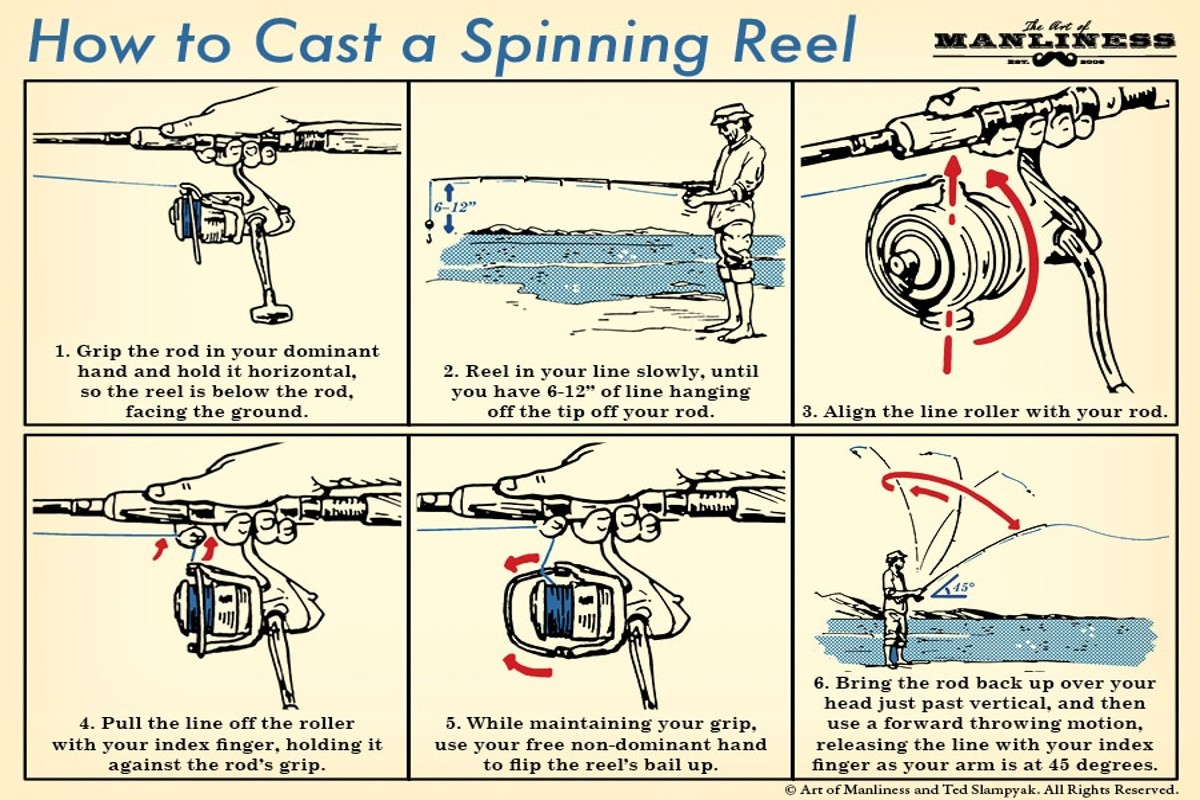
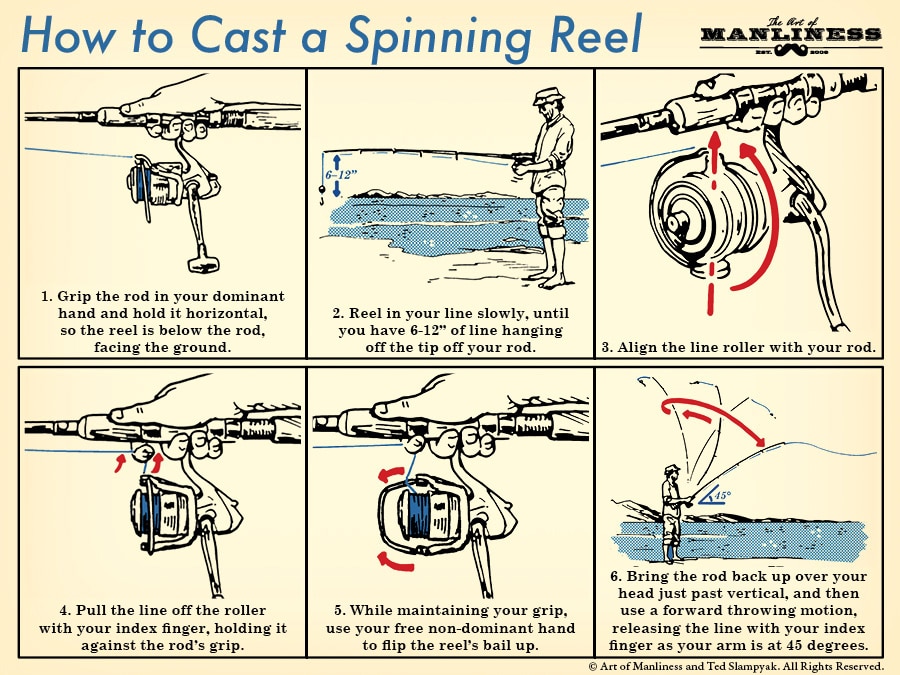
How To Use A Spinning Fishing Rod involves mastering the casting technique, understanding reel operation, and knowing how to set the hook. This skill is essential for anglers looking to improve their fishing success and enjoy the experience.
Whether you’re a beginner or looking to refine your technique, knowing how to effectively use a spinning rod can enhance your time on the water. With the right tips, you can increase your catch and make fishing more enjoyable.
Choosing the right spinning rod can make a huge difference in your fishing experience. With so many options available, it’s essential to know what features matter most for your needs.
Choosing the Right Spinning Rod
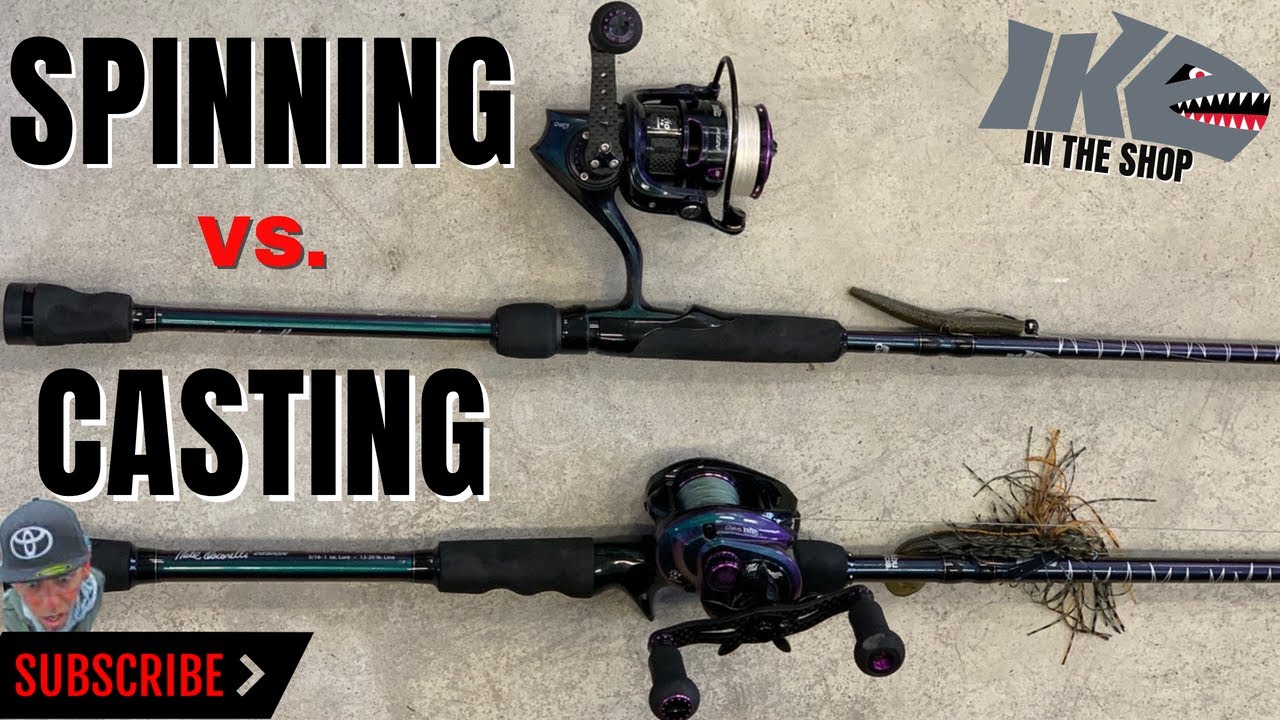
When selecting a spinning rod, consider factors like rod length, action, and material. These elements will impact your casting distance, sensitivity, and overall performance on the water.
First up is rod length. Longer rods typically allow for greater casting distance, which can be beneficial when fishing in larger bodies of water. However, if you’re fishing in tight spots, a shorter rod can help you maneuver better. Think about where you’ll be fishing most often.
Next, let’s talk about action. Rod action refers to how much the rod bends when pressure is applied. Fast action rods bend near the tip, providing quicker sensitivity and response, making them great for catching fast-moving fish. Conversely, slow action rods bend along the entire length, offering more flexibility, which can be better for lighter tackle and species that are less aggressive.
Material is another critical factor. Spinning rods are usually made from graphite or fiberglass. Graphite rods are lighter and more sensitive, perfect for feeling those subtle bites. On the other hand, fiberglass rods are typically more durable and can handle rough conditions, making them great for beginners.
Finally, don’t forget to match your rod with the right reel size. A well-balanced setup enhances your casting efficiency and overall comfort. If you pair a heavy rod with a lightweight reel, or vice versa, you might find it difficult to cast or reel in your catch effectively.
For instance, if you’re planning to fish for bass in a local lake, a medium-heavy, 7-foot rod with fast action and a graphite construction might be ideal. This setup will give you the sensitivity to detect bites and the strength to handle those aggressive bass.
Before you buy, think about where and how you’ll be fishing. Choosing the right spinning rod can elevate your experience and help you land that big catch. So take your time and find a rod that feels right for you—your fishing success depends on it!
Setting up your spinning rod properly can make all the difference in your fishing experience. A well-prepared rod and reel will help you cast farther and catch more fish. Let’s dive into the essential steps for getting your spinning fishing rod ready to go.
Setting Up Your Spinning Rod
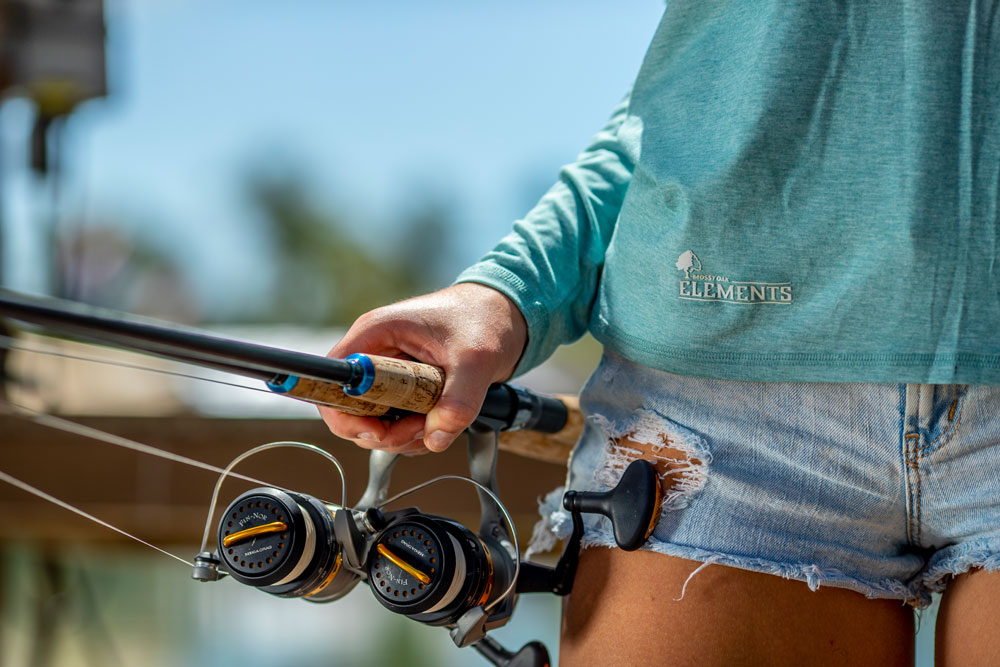
To maximize your success on the water, you need to know how to set up your spinning rod and reel. This involves threading the line correctly, attaching the right lures and hooks, and adjusting your drag settings to suit your fishing style.
First, let’s talk about threading the line. Start by tying your line to the spool of your reel. Open the bail arm, and thread the line through the first guide on the rod. Make sure the line is coming off the spool in the right direction. If you get this wrong, you’ll have a tangled mess when you cast. A good tip is to hold the line between your fingers to see which way it’s unwinding; that’s the way it should go onto the reel.
Next up is attaching lures and hooks. Depending on what you’re fishing for, you might choose a spinning lure, jig, or a simple hook with bait. Use a strong knot, like the improved clinch knot, to secure your lure. This knot is easy to tie and holds well, reducing the chances of losing your catch. Imagine you’re out by the lake, and the perfect fish bites—don’t let a weak knot be the reason it gets away!
Lastly, you’ll want to adjust your drag settings. The drag controls how much resistance a fish feels when it pulls on the line, which can save you from breaking it. If you’re targeting bigger fish, set the drag tighter, but keep it loose enough to allow smaller fish to pull a bit. A good rule of thumb is to set the drag to about one-third of your line’s breaking strength. This way, you’ll have the flexibility needed to reel in that trophy catch.
Setting up your spinning rod doesn’t have to be complicated. With these simple steps, you’ll be well on your way to mastering how to use a spinning fishing rod effectively. Remember, practice makes perfect, so take your time to get it right before you hit the water.
Mastering your casting technique can make all the difference when you’re out on the water with your spinning rod. Whether you’re aiming for distance or precision, knowing the right methods will enhance your fishing experience.
Casting Techniques for Spinning Rods
There are a few fundamental casting techniques that every angler should master. These methods will help you achieve greater distance and accuracy, ensuring your bait lands exactly where you want it to.
First up is the overhead cast. This technique is great for covering distance. You’ll want to stand with your feet shoulder-width apart, hold the rod at a 90-degree angle above your shoulder, and then bring it forward in a smooth motion. As you release the line, flick your wrist to send the lure soaring. Imagine you’re throwing a ball; the motion is similar, and practice will definitely make perfect.
Next, let’s talk about the sidearm cast. This method is particularly useful in tight spots where you need to avoid obstacles like trees or rocks. To execute a sidearm cast, drop your rod to your side and swing it horizontally. Keep your elbow bent and your wrist straight as you flick your wrist at the end of the motion. You’ll find this technique gives you great accuracy, allowing you to place your lure right in the strike zone.
Pitching Techniques
Now, let’s dive into pitching techniques. Pitching is a more controlled method of casting that’s perfect for close-range fishing, like when you’re trying to land a lure under a dock or near a structure. Hold your spinning rod at about a 45-degree angle and let the lure drop down. As you swing the rod forward, release the line at the right moment to let the lure drop softly into the water. This method takes a bit of practice, but it’s incredibly effective.
One practical tip: when you’re practicing these techniques, focus on your posture and grip. Keeping a relaxed grip on the rod can greatly improve your casting accuracy. If you’re tense, it can throw off your aim, so take a deep breath and let it flow.
Retrieving your line effectively can make a huge difference in your fishing success. Different scenarios call for different retrieval methods, and knowing how to adapt is key.

Retrieving Your Line
Understanding various retrieval techniques can help you land more fish. Whether you’re trying to mimic prey or cover ground quickly, the right method can make all the difference.
One of the simplest retrieval techniques is the constant retrieve. This method involves reeling in your line at a steady pace. It works well when you’re fishing in open water or targeting species that are actively feeding. Picture this: you’re on a serene lake, casting your line and steadily reeling it back in. It’s a straightforward approach that can yield great results.
Next up is the stop-and-go technique. This method involves reeling in your line and then pausing for a moment before continuing. It’s particularly effective when fishing for species that are ambush predators, like bass. The pauses imitate the erratic movements of wounded prey, enticing fish to strike. You can think of it like playing a game of cat and mouse, where you keep the fish guessing.
Lastly, there’s the jigging method. This technique involves lifting and dropping your rod tip while reeling in your line, which creates a vertical movement that mimics a baitfish swimming. Jigging is especially effective in deeper waters or when targeting species like trout or walleye. Imagine you’re on a pier, dropping your jig into the water, and giving it a little hop. You’ll often feel a hit right as you drop it!
When you’re out there, try mixing these techniques based on the conditions and the type of fish you’re targeting. Experimenting with speed and rhythm can lead to surprising results. Remember, knowing how to use a spinning fishing rod effectively isn’t just about your gear; it’s about how you retrieve your line too.
Once you’ve got a fish on your line, knowing how to set the hook and fight it is crucial. Timing and technique can make all the difference between landing your catch and losing it. Let’s dive into the essentials.

Setting the Hook and Fighting the Fish
Setting the hook and fighting the fish are two skills that can be mastered with a bit of practice. The goal is to secure your catch while maintaining control, so you can enjoy the thrill of the fight.
Timing your hook set is key. When you feel a tug, wait just a brief moment to ensure the fish has fully taken the bait. A good rule of thumb is to count to one before you pull back on the rod. This can help you avoid setting the hook too early, which might result in a missed catch.
Next, let’s talk about the proper rod angle. When you hook a fish, raise your rod tip to about 45 degrees. This angle lets you maintain tension on the line without putting too much pressure on the fish. If you keep the rod too low, you risk losing control, and if it’s too high, you might snap the line. Balance is everything!
Playing the fish effectively is where the real fun begins. Keep a steady pressure on the line, but be ready to give a little when the fish makes a run. Letting it take some line will prevent the hook from tearing free. If the fish jumps, lower your rod to keep the line tight; this is a crucial moment when many anglers lose their catch.
Imagine you’re out on the water and you hook a big bass. It takes off with a burst of energy, and your heart races. You remember to let it run, keeping tension on the line, while using the right rod angle. After a thrilling fight, you finally reel it in. That’s the magic of knowing how to use a spinning fishing rod!
Always be aware of your surroundings and adjust your strategy based on the fish’s behavior. Different species may require different techniques. The key takeaway? Patience and practice make perfect. You’ll find that the more comfortable you become with these techniques, the more successful you’ll be in your fishing adventures.
Taking care of your spinning fishing rod is crucial for its longevity and performance. Regular maintenance keeps your gear in top shape, ensuring you enjoy many successful fishing trips.
Maintenance and Care for Your Spinning Rod
Proper maintenance involves cleaning, inspecting, and storing your rod and reel correctly. With just a little effort, you can keep everything working smoothly for years to come.
First up, cleaning your rod and reel is essential. After each fishing trip, rinse off any saltwater or debris using fresh water. This simple step prevents corrosion and keeps your equipment looking new. Don’t forget to wipe down the rod blank and reel with a soft cloth to remove dirt and grime.
Next, inspect the guides and line regularly. Damaged guides can cause line wear and lead to frustrating breaks during a catch. Examine each guide for any nicks or cracks, and replace them if needed. As for the line, check for frays or twists. If you notice any issues, consider re-spooling with fresh line to ensure smooth casting when you’re out on the water.
Storage is just as important as cleaning and inspecting. When you’re done fishing, store your spinning rod in a protective case or rod sock to prevent scratches and bends. Try to keep it in a cool, dry place, away from extreme temperatures. If you have multiple rods, a vertical rod rack can save space and keep everything organized.
For example, imagine you just had an amazing day fishing and caught a big bass. You’re excited, but if you toss your gear in the garage without proper care, you might ruin that spinning rod. Taking a few minutes to clean and store it right can save you from costly repairs later.
Remember, spending a little time on maintenance will pay off in the long run. By following these tips, you’ll not only extend the life of your equipment but also enhance your overall fishing experience. Now that you know how to use a spinning fishing rod effectively, keeping it in prime condition is the next step to becoming a fishing pro!