
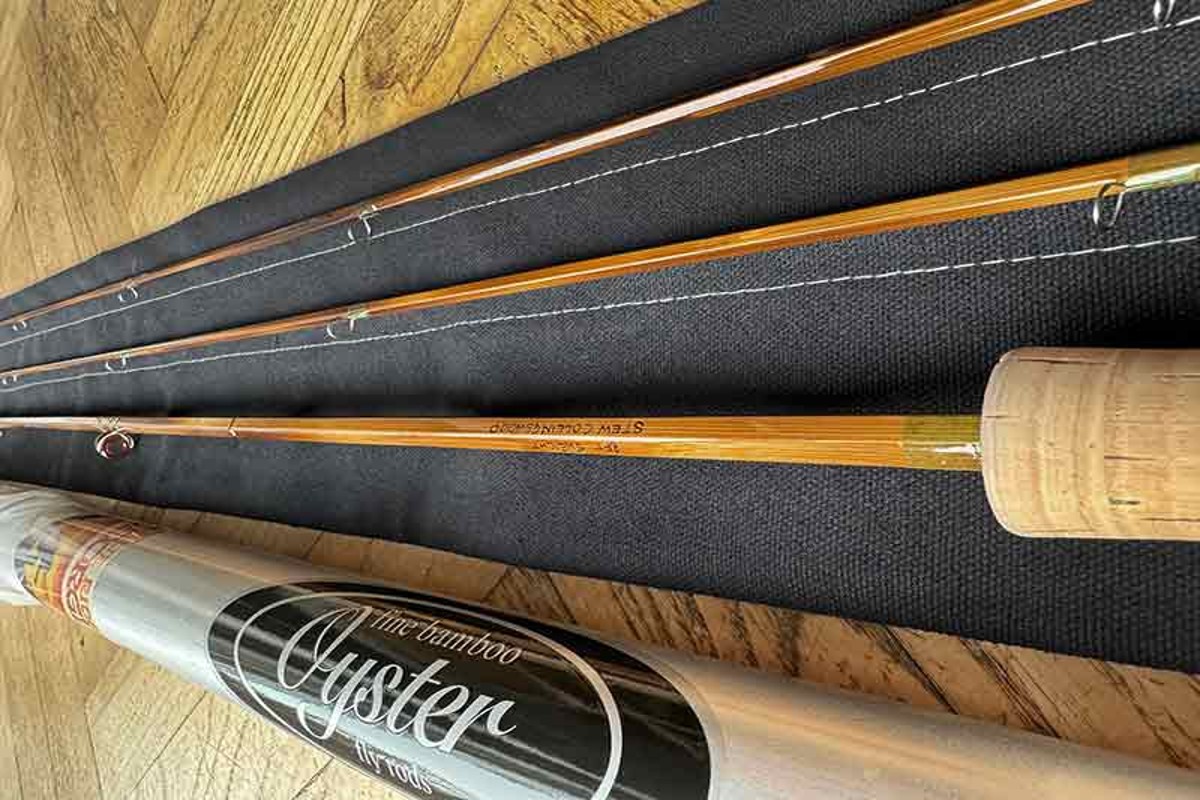
When my buddy Craig dared me to craft a bamboo fly fishing rod, I thought, “How hard could it be?”
But as I dove into the project, I quickly realized this wasn’t just about fishing.
I’ll also share the wild mistakes I made and the lessons that transformed my approach to the sport.
Trust me, this journey turned out to be way more rewarding than I ever anticipated!
How to make bamboo fly fishing rods involves selecting high-quality bamboo, splitting and planing the strips to form the rod sections, and binding and finishing them with guides and a handle. Finally, applying a protective finish enhances both durability and beauty.
But the answer alone doesn’t tell the whole story — let me walk you through what I actually experienced.
Here’s something that got my heart racing.
It all started when Craig was telling me about his latest fishing gear obsession.
He sounded like a kid in a candy store, but then he dropped a challenge on me.
The Challenge: Can I Really Make My Own Fishing Rod?
“You should make your own bamboo fly fishing rod,” he said.
My initial response was laughter. Right?
But deep down, I felt a flicker of excitement.
Could I really do it?
As I dove into researching techniques, doubts crept in.
There are so many details to consider.
Types of bamboo, proper tools, and all those finishing touches.
My head spun thinking about it. What was I getting myself into?
But after a couple of sleepless nights—and maybe too much coffee—I decided to take the plunge.
Gathering materials felt exhilarating.
It felt like claiming my spot in the bamboo rod-making club. Just me, a few sticks of bamboo, and a wild dream.
The part that caught me off guard was how much I wanted to prove Craig wrong—or maybe right.
It was about more than just fishing.
It was about the challenge, the craftsmanship, and the thrill of creating something with my own hands.
What I learned from that was sometimes, diving headfirst into a new adventure can shake you out of your comfort zone.
There’s a beauty in the unknown, too.
It forces you to learn and adapt, even if you have no idea what you’re doing — which, trust me, I didn’t.
So, if I had to do it again, I’d probably bring Craig along for moral support.
A shared adventure makes the challenge feel more doable.
And who knows? He might need a bamboo rod for himself one day, anyway.
Here’s something I didn’t expect.
While scrolling through the comments on a news article about fishing gear, I stumbled across a guy ranting about how cheap fishing rods ruin the experience.
It got me thinking: what if I made my own rod?
Gathering Supplies: A Treasure Hunt for Bamboo
One Saturday, I set out on a quest.
Not just any quest, though—this was a treasure hunt for bamboo.
My buddy Craig was all in when I mentioned it.
“Let’s hit the backroads of Fresno,” he said, practically buzzing with excitement.
We drove past familiar neighborhoods, heading towards spots I hadn’t really noticed before.
The sun was shining, and I felt like there could be hidden gems just off the beaten path.
Then, out of nowhere, we saw a local bamboo grove tucked away behind a rundown fence.
I couldn’t believe it—bamboo grows wild around here!
What caught me off guard was how many different types of bamboo there are.
I had no idea there was so much variety.
Some were thick like a baseball bat, while others looked delicately thin.
“Is that one good for fly rods?” I wondered aloud.
It felt like I was simultaneously in a nature documentary and a DIY show.
And then, we met him—an old craftsman named Hank.
He was out there, carefully trimming his bamboo like it was a work of art.
I guess he could see the excitement in our eyes, because he stopped to chat.
“Most people think of bamboo as just a weed,” he said, shaking his head.
“But it’s a key ingredient for making rods that’ll last a lifetime.”
What I learned from Hank was invaluable.
He showed us how to select the best stalks.
It wasn’t just about size; you had to look for straightness, color, and even the sound it made when tapped.
“You need the right vibration,” he insisted. “Check this out.”
He knocked on a few stalks and, sure enough, some resonated like a drum, while others just thudded.
“These will make the best rods for casting,” he explained.
That moment hit me—this was more than a project; it was a craft, an art form.
If we hadn’t decided to wander off the main roads, I wouldn’t have met Hank, and that would have been a real shame.
It’s crazy how one silly comment on a news article nudged me toward this journey.
If I had to do it again, I’d definitely explore more hidden spots around Fresno.
You never know what treasures are waiting just off the path.
Here’s something I didn’t expect.
As I sat splitting bamboo in my backyard, I realized I was in for more than just a DIY project.
This was a lesson in patience and craftsmanship.
The Art of Splitting Bamboo: A Lesson in Patience
The sun was shining bright over Fresno that day.
All I had was a bundle of bamboo and a lot of enthusiasm.
I thought, “How hard can it be?”
Turns out, splitting bamboo is an art form all its own.
The first piece I tried to split ended up in splinters everywhere.
I mean, seriously, bamboo is tougher than it looks.
With each new attempt, I learned something.
Precision was crucial — no pressure, no sudden moves.
Just me, the bamboo, and the rhythm of the split.
But yeah, I had a few mishaps.
The part that caught me off guard was how frustrating it could get.
Sometimes, I’d feel this wave of anger when things didn’t go my way.
For a split second, I considered tossing the whole thing.
But each error taught me something new.
It was all about adjusting the angle, applying less force.
I found myself in this odd meditative state.
You know, the kind of zone where time slips away?
As I picked up the pieces, I actually started to enjoy the process.
The rhythm of splitting bamboo became soothing almost.
I’d tap-tap-tap, listen to the crack with each careful motion.
Craig even stopped by and caught me in a Zen moment.
“Dude, you look like you’ve found your calling,” he said.
What I learned from that was to embrace the mistakes.
Each one was a lesson in patience, precision, and self-forgiveness.
I realized if I wanted to get really good at making bamboo fly fishing rods,
I had to fall in love with the craft — every messy second of it.
- Precision is key — don’t rush it.
- Embrace the mistakes — they teach you.
- Find joy in the process — it’s not just about the end product.
If I had to do it again, I’d remind myself that skill comes with time.
Every splinter is a reminder that the journey is just as important as the destination.
This bamboo rod isn’t just a tool for fishing — it’s a testament to my patience.
I’ll never forget the day Craig decided to take on the challenge of binding bamboo sections for his own fly rod.
He called me over, excited but a little nervous.
He’d read somewhere that duct tape was the way to go — it didn’t work out so well.
Binding the Sections: A Test of Skill and Creativity
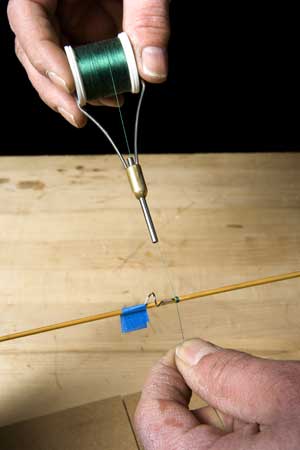
So, with my bamboo pieces laid out, I found myself staring at my next big hurdle: binding them together.
I wanted something that wouldn’t just hold but would look good, too.
Choosing the right binding material felt overwhelming at first.
I experimented with different threads and colors, trying to find a combination that felt right.
Craig had opted for plain black thread, thinking it was a safe choice.
But when I saw the vibrant red and gold options, I couldn’t resist bringing some flair into the mix.
As I wrapped the first section, I felt that rush — a blend of anxiety and excitement.
It was just thread, but in that moment, it felt like I was tying together my passion and creativity.
What I learned from that was how the smallest details can change the whole vibe.
Each layer of thread felt like a decision that mattered, adding to the rod’s identity.
When it started to take shape, I felt a sense of accomplishment wash over me.
I’m talking about that feeling where you step back and think, “Yeah, I made that.”
The part that caught me off guard was how meditative the binding process became.
It took time — not just to get the technique right but to enjoy it.
As I slowly wrapped each section, it was almost therapeutic.
I lost track of time, and it felt like my worries faded away.
- Choosing bright colors made it unique.
- A tighter wrap gave me more confidence.
- Taking breaks helped keep my focus sharp.
If I had to do it again, I’d definitely play around with more colors.
And I’d probably get Craig to join in, armed with lessons from my mistakes.
The thing nobody tells you is that the process is almost as rewarding as the final product.
When I finally finished binding and stepped back to admire the rod, I knew it was going to be something special.
Learning how to make bamboo fly fishing rods isn’t just about technique; it’s about the journey.
Here’s something I didn’t see coming.
As I was getting ready to apply the final finish to my bamboo fly fishing rod, I kept thinking back to that late-night chat with Craig.
He’d asked me why this project mattered so much to me—and I honestly couldn’t answer right away.
The Final Touch: Finishing the Rod and My Heart
It all felt surreal as I picked out the finish.
I spent hours exploring options—glossy, matte, or something in between.
Choosing the right finish wasn’t just about looks.
It was about protection, about preserving the craftsmanship I’d poured my heart into for weeks.
The moment I brushed that first layer on, I felt a rush of pride and excitement.
I couldn’t help but think about how this wasn’t just a fishing rod.
It was a symbol of my journey, my late nights spent researching how to make bamboo fly fishing rods, and all the little setbacks along the way.
This rod represented growth, patience, and passion.
The part that caught me off guard was the emotion that hit me when it was all said and done.
As I set the rod aside to dry, I almost expected a burst of confetti or applause.
Instead, it was just me in my garage with a huge grin, feeling oddly fulfilled.
Plans started to form for my first fishing trip with this beauty.
I’d been talking about it with Craig, of course.
He couldn’t wait to see it in action, and honestly, neither could I.
We made plans to hit up the Merced River—that’s where I’d bring this rod to life.
What I learned from that was that creating something with your own hands is magical.
It’s not just about the end product but everything you go through to get there.
Each misstep, every moment of frustration, added depth to my experience.
This fishing rod now felt like a part of me.
In the end, the thing nobody tells you is how projects like this can change you.
It’s not just about fishing—it’s about being present, creating memories, and connecting with nature in a way that feels whole.
If I had to do it again, I wouldn’t change a thing.
I’d still slow down and savor every part of the process.
Before I dive in, I just want to let you know —
everything I’m sharing here is based on my own experiences and a sprinkle of imagination.
I’m not a pro, so if you’re thinking about getting serious with this stuff,
it’s always a great idea to chat with someone who really knows their way around fly rods!
I’ll admit something right off the bat.
Using my handmade bamboo rod on the water was like nothing I’d ever experienced.
I was hooked — literally and figuratively.
Casting Into the Future: What’s Next for My Craft?
After that first catch, I felt this rush.
It was exhilarating, the kind of thrill you just can’t replicate.
That moment got me daydreaming about my next steps.
What if I could make more rods for my friends?
They’d love the experience as much as I did.
The part that caught me off guard was the sheer joy of sharing this passion.
Like when I told Craig about it, and he got excited too.
I could imagine us out on the river, fishing side by side, using rods I crafted myself.
What a way to bond, right?
But here’s the kicker — I made a mistake early on.
When I first started building these rods, I didn’t consider the different fishing styles my friends had.
I was so focused on my design that I forgot to ask them what they needed.
Turns out, not everyone prefers the same weight or action in a rod.
What I learned from that was crucial.
Making bamboo fly fishing rods isn’t just about crafting something beautiful.
It’s about understanding the person who’s going to use it.
After realizing my blunder, I made it a point to get input from my buddies.
Now, I’m on a mission to create rods tailored to each friend’s taste.
- Personalized designs for each friend.
- Researching different fishing techniques.
- Sharing stories while fishing together.
If I had to do it again, I’d definitely involve my friends sooner.
What a way to bond — not just over fishing, but over crafting the perfect rod.
And let’s not forget the idea of passing this passion down.
I can already picture teaching my kids how to make their own rods one day.
That feeling? Pure gold.